Supreme Court Agrees to Hear Landmark Case on Mail-In Ballots
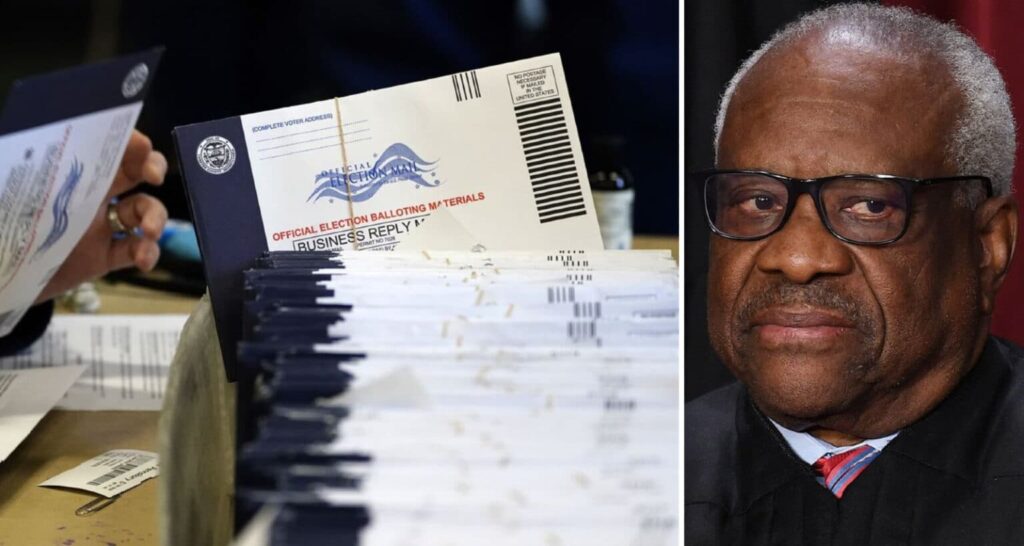
The U.S. Supreme Court has agreed to take up a major election law case that could determine whether states may count mail-in ballots received after Election Day. The ruling could settle a long-running dispute with potentially sweeping implications for federal elections heading into the 2026 midterm elections.
The justices granted review in Watson v. Republican National Committee, a case challenging a federal statute that bars states from accepting mailed ballots after Election Day. The petition, filed by Mississippi Secretary of State Michael Watson, argues that Congress clearly defined a single, nationwide election day for federal offices — the Tuesday after the first Monday in November — and that states cannot extend counting periods beyond that date.
The Court’s unsigned order, issued without dissent, adds another high-profile election dispute to its docket amid ongoing partisan battles over mail voting and ballot counting deadlines. The case will test how far federal law preempts state authority to manage elections — an issue that has divided lower courts and election officials since 2020.
Under current law, 18 states accept mailed ballots that arrive after Election Day if they are postmarked by that date, according to the National Conference of State Legislatures. Mississippi is among those states, allowing ballots received within five business days of the election to be counted.
But the U.S. Court of Appeals for the Fifth Circuit ruled that the federal statute setting the official date for congressional and presidential elections overrides that provision, effectively requiring ballots to be received — not just mailed — by Election Day.
Judicial Watch President Tom Fitton, whose group represents the Libertarian Party of Mississippi in the case, called the Supreme Court’s decision to hear the appeal “an opportunity to reaffirm that Election Day means what it says.”
“Counting ballots received after Election Day not only violates federal law but encourages voter fraud and undermines voter confidence,” Fitton said. “The Supreme Court should uphold the Fifth Circuit’s sensible conclusion that counting ballots received after Election Day is unlawful.”
The dispute is one of several election-related cases now making their way through federal courts ahead of the next midterm cycle. In a related case, the Supreme Court appeared receptive last month to a Republican lawmaker’s challenge to Illinois’s statute allowing ballots to be counted for up to two weeks after Election Day. That case, Bost v. Illinois State Board of Elections, centers on whether the congressman has legal standing to bring the suit.
Both cases reflect ongoing partisan divides over the expansion of mail-in voting — an issue that exploded during the pandemic and has remained a central flashpoint in national politics. Republicans have pushed to tighten deadlines, arguing that extended ballot counts erode public confidence and create opportunities for fraud. Democrats contend that shorter deadlines disenfranchise military voters, rural residents, and others who rely on the postal system; however, a number of Democrat-run states have universal or excuse-free mail-in ballots.
A decision is expected by June 2026, in time to shape how ballots are handled in the midterm elections. If the Court sides with the Fifth Circuit, states that currently count late-arriving ballots may have to overhaul their systems and tighten deadlines before November 2026.
Legal observers say Watson v. RNC could become one of the most consequential election cases since the Court’s 2020 rulings on pandemic-era voting procedures. It also gives the Court’s conservative majority — which has often emphasized textual and constitutional limits on election administration — an opportunity to set clearer national standards for when ballots must be received.
The justices have not yet scheduled oral arguments, but the case is expected to be heard early next year, with a decision by the summer. Until then, election officials in dozens of states will continue to operate under a patchwork of laws that could change dramatically depending on how the Court defines one of the most fundamental questions about voting in America: When does Election Day end?