The Weight She Carried
The morning I went into labor, the sky outside my hospital window was the color of old pewter. I remember watching a single crow land on the ledge, look around with that sharp sideways intelligence birds have, and then fly off again. I thought about omens and dismissed the thought immediately. I was a practical woman. I had always been a practical woman. It was the only way I knew how to survive the particular shape my life had taken, one that required a certain flatness of expectation, a willingness to work with what was in front of you rather than grieving what was not.
My name is Dana. I am thirty four years old, a kindergarten teacher, a mother to a six year old boy named Oliver who smells perpetually of grass and peanut butter and who is the most uncomplicated source of joy in my life. I live in a two bedroom apartment with a secondhand couch that I love unreasonably and a coffee maker that takes eleven minutes to brew a full pot, which I have timed on multiple occasions and accepted as simply true about the machine, the way you accept true things about the people you live with. I am the kind of person who writes grocery lists in order of the store layout. I color code my calendar. I do not own a single houseplant because I know my limitations.
I am, in most measurable ways, an ordinary woman.
Except that on that pewter gray morning in late October, I was about to give birth to someone else’s daughter.
My twin brother Ryan has always been the more beautiful of us, which sounds like a strange thing to say about a sibling, but it is simply true and we both knew it from the time we were old enough to understand that faces could be measured against each other. Where I have our mother’s bluntness of feature, Ryan got her eyes and our father’s jaw, and the combination produced something that had been stopping people mid sentence since he was about fifteen. He wore it without particular vanity, which made it more effective rather than less. He was also, in the quiet way that only the people closest to him would ever understand, one of the most genuinely decent human beings I have ever known. Not performatively decent, not kind in the showy way that wants acknowledgment. The real kind. The kind that remembers without being reminded and shows up without being asked and holds whatever you give him without letting it drop.
We grew up in a house where love was real but resources were thin. Our parents worked hard and died young, our father from a heart attack at fifty eight and our mother from a grief that dressed itself up as pneumonia two winters later. Ryan and I inherited their house, their debts, and each other. We sold the house, paid the debts, and for a while we were each other’s entire family, the way twins sometimes are, collapsed inward against the world, presenting a unified front to everything that came at us from outside it.
We were good at it. We had been practicing since before we were born.
Then he met Melissa.
She came into his life at a work conference in Atlanta, where Ryan was presenting a paper on structural load distribution in residential buildings and Melissa was there representing a nonprofit focused on affordable housing design. They argued for twenty minutes over a dinner buffet about whether aesthetics or functionality should drive low income housing decisions, and by the end of the argument they were standing close enough together that a passing colleague stopped to ask if they were married. They were not, at that point, but Melissa later told me that she had thought in that moment, with the matter of fact clarity that characterized most of her thinking, that it was not out of the question.
Three years later, they were.
I liked Melissa immediately and without reservation, which was unusual for me. I tend to circle new people slowly, like a dog deciding whether a stranger’s extended hand represents goodwill or threat. But Melissa had a quality of stillness that I found calming rather than guarded, and a sense of humor that ran dry and late, arriving after a pause, the way a good punchline should arrive: when you have already moved on and then it lands behind you and you have to stop and go back to collect it. She was also visibly, unmistakably good for Ryan. He laughed more. He cooked elaborate things on Sundays and sent me photographs of them with the pleased proprietary air of a man who has recently discovered a talent. He started learning to play guitar badly and without shame, recording himself and sending me the clips, which I considered a sign of profound psychological health.
They tried to have children for four years.
I watched it happen from close enough to see the texture of it, which is different from watching from a distance. The first year was hope, ordinary and energetic. The second was effort and optimism still, with the addition of doctors and the first gentle language of intervention. The third was appointments and procedures and the vocabulary of reproductive medicine settling over everything like a frost, changing the way they spoke about time and the future, making both things feel provisional. By the fourth year there was a quality to their silences that I recognized, the same quality that had lived in my apartment for months after our mother died: that particular hollow that forms when something you have been counting on turns out not to be where you thought it was.
The doctors were thorough and, eventually, conclusive. The issue was with Melissa’s uterus, a structural abnormality that had likely been present since birth and had gone unremarked because there had been no occasion to look for it. The abnormality made carrying a pregnancy to term essentially impossible. Not certainly impossible, one doctor was careful to note, but the probability was low enough that it would be unkind to encourage a path that was likely to produce only more loss. Melissa could produce healthy eggs. Ryan’s sperm tested at every metric within normal range. The genetic material was entirely there, intact and waiting. The only missing piece was a body willing and able to hold it.
Ryan called me on a Tuesday evening in March. I remember it was Tuesday because Oliver had soccer practice and I was sitting in my car outside the field, eating a granola bar, watching small children run chaotically after a ball, which I find unreasonably soothing as an activity. Something about the gap between their earnest effort and their technical execution. Ryan said he needed to ask me something and that I should feel completely free to say no and that he meant it about the no, genuinely, that a no would not change anything between us and he needed me to believe that before he said another word.
I told him to just ask.
He asked.
I sat there in the car watching a child kick the ball directly into their own team’s goal and experience a visible journey through confusion, betrayal, and philosophical resignation, and I thought about what Ryan was actually asking me to do. He was asking me to give over my body for the better part of a year. To go through a pregnancy, which I already knew firsthand was not a walk in the park. To grow a child and then hand her over, to love something into existence from the inside out and then step back and let it belong entirely to someone else.
And here is what I thought, sitting in that car in the failing October light: Ryan had sat in a hospital waiting room for six hours when Oliver was born, eating vending machine crackers and reading me terrible jokes from his phone until I laughed despite the contraction that had just been through me like a train. When our mother died, he drove four hours in a snowstorm because he had understood, correctly, that I should not be alone with that information for any longer than necessary. He had shown up, consistently and without complaint or announcement, at every moment of my life that required showing up. Not because he felt obligated, but because showing up was simply his way of existing in the world.
He was offering me the same chance. To show up for something that mattered. To give him the one thing that only I could give, that no amount of money or medicine or waiting could produce without a willing body.
I told him yes.
He was quiet for a long moment. The kind of silence that has weight to it.
Then he said, “Dana.”
Just my name. But the way he said it contained everything that the situation required, every layer of it, gratitude and relief and love and the particular sorrow of needing help and having it offered.
The process was clinical and strange and, in its way, remarkable. We worked with a reproductive specialist, Dr. Ahuja, who had the manner of a particularly competent librarian: efficient, precise, and somehow reassuring by virtue of her complete lack of sentimentality. She was interested in outcomes and protocols and the accurate measurement of things.
She had no interest in drama or narrative, which made her the ideal person to guide us through what was, by definition, a situation thick with both.
The transfer took place on a rainy Thursday in June. It was over in twenty minutes. Six days later, a blood test confirmed what I could already feel: the embryo had taken.
The nine months that followed were a exercise in boundaries, fine lines drawn in the dust of daily life. I was pregnant, but I was not having a baby. I was carrying one. The distinction sounds academic until you are the one waking up with morning sickness for a child you will not be taking home, or feeling a kick against your ribs and passing your brother’s wife’s hand over your sweater so she can feel it too.
To Melissa’s credit, she handled it with a grace that still moves me when I think about it. She came to every appointment, took notes in a small leather-bound notebook, and brought me ginger tea and plain crackers without ever making me feel like an incubator. She looked at my growing belly with a mixture of reverence and profound sorrow, and I learned to hold space for both emotions without trying to fix either one.
When my labor started, Ryan and Melissa were in the room within twenty minutes.
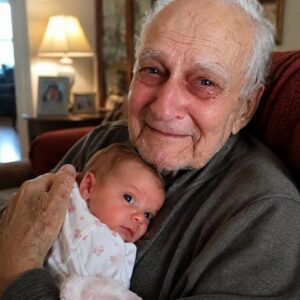
The delivery was long and hard, the kind of physical ordeal that strips away everything extraneous until there is only the work of breathing and pushing. When the baby finally arrived—7 pounds, 4 ounces, with a shock of dark hair and eyes the color of slate—the room fell quiet in that sacred way birth rooms do before the first cry breaks the air.
Dr. Ahuja placed the baby directly onto Melissa’s chest, as we had agreed months before. Melissa began to weep, quiet, breathless sobs of four years’ worth of grief finally washing out of her. Ryan was kneeling beside the bed, his arm around Melissa, his hand cupping the back of the baby’s tiny head.
I lay back against the pillows, exhausted, empty, and strangely peaceful. I had done what I set out to do.
Then Ryan stood up.
He walked around the side of the bed, sat on the edge of my mattress, and took my hand. His face was wet with tears, his knuckles white where he held mine.
“Dana,” he said, his voice raw. “We need to tell you something.”
I froze. A sudden cold knot formed in my stomach. In all our preparations, all our careful boundary-setting and legal agreements, I had never anticipated a moment like this.
“What is it?” I whispered.
Melissa looked up from the baby, tears still glistening on her cheeks, but her expression wasn’t angry or panicked—it was heavy with a deep, solemn gratitude.
“When we set up the trust fund for her last month,” Ryan said, his voice trembling, “we had to register her legal name for the documents. We didn’t tell you because… because we were afraid you’d try to talk us out of it, or feel uncomfortable while you were still carrying her.”
He reached into his pocket and pulled out a folded piece of paper—the hospital intake verification form—and opened it so I could see the line for the baby’s name.
Written in neat, dark blue ink was: Dana Claire Vance.
“She isn’t named after you just as a tribute,” Ryan said, squeezing my hand tightly. “We want her to grow up knowing that before she ever took her first breath, her aunt gave up her body, her comfort, and a year of her life just so she could exist. Every time we call her name, we want to be reminded of what real love looks like.”
I sat in that gray October light, listening to the small squeaks of my niece, and for the first time in nine months, I didn’t hold back the tears. I looked at my brother, my twin, the boy who had sat beside me through every loss and every quiet victory, and realized that in giving them a daughter, I hadn’t given anything away at all. I had simply expanded the walls of our house to make room for one more.