Chicago Judge Restricts ICE Courthouse Arrests, Setting Up Clash Over Deportations
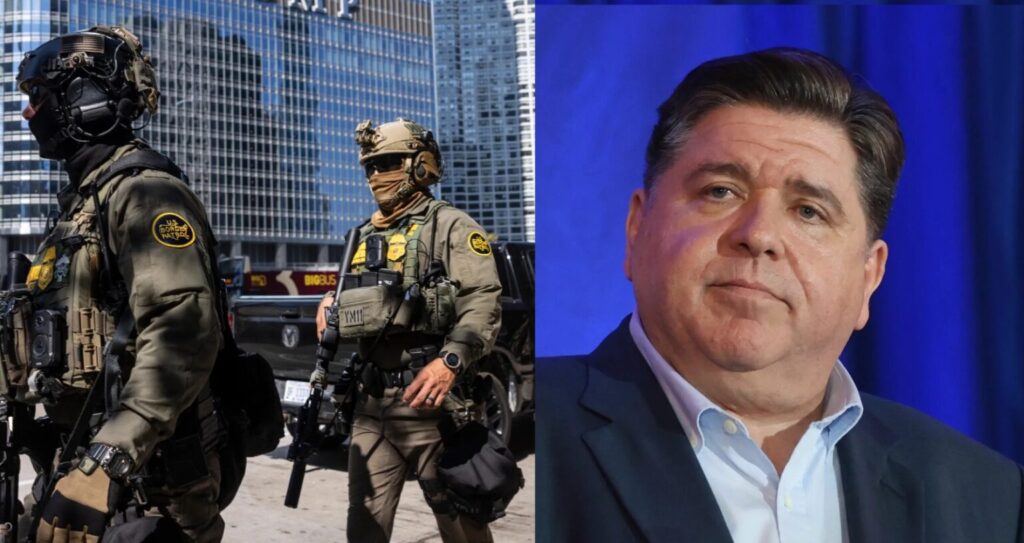
A federal judge in Illinois ruled that Immigration and Customs Enforcement (ICE) may not arrest illegal aliens at courthouses without a judicial warrant and indicated agents could face contempt penalties if they violate the order.
U.S. District Judge Jeffrey Cummings issued the order in a long-running class action first filed in 2018—during the Obama administration—styled Margarito Castañon Nava, et al. v. Department of Homeland Security, et al.
The case led to a 2022 settlement that constrained how ICE conducts warrantless “collateral” arrests in the agency’s Chicago Field Office region (Illinois, Indiana, Wisconsin, Missouri, Kentucky, and Kansas). Cummings claimed that he found “repeated, material” violations by ICE and extended court supervision into 2026.
The ruling comes amid the administration’s push to accelerate removals and to stage larger operations near federal facilities, including courthouses. Homeland Security said it will comply with lawful orders but warned the decision makes it harder to remove individuals with final orders and to secure federal buildings and personnel during volatile protests.
The opinion’s most consequential pieces for enforcement are procedural. Cummings reaffirmed that under 8 U.S.C. § 1357(a)(2), warrantless immigration arrests require not only probable cause that a person is removable but also contemporaneous facts showing the individual is “likely to escape before a warrant can be obtained.”
The court said ICE must document that “likelihood of escape” at the time of the arrest—on Form I-213—and must document it as soon as practicably possible. He ordered ICE to re-broadcast that policy to all officers, obtain written acknowledgments, and produce ongoing reports.
Cummings also rejected ICE’s recent practice of having field supervisors generate administrative arrest warrants (Form I-200) on the spot for collateral encounters, without first issuing a Notice to Appear (NTA). Citing 8 C.F.R. §§ 236.1(b) and 1236.1(b), he said I-200 warrants are tied to the charging process and cannot be used as a workaround to avoid the statute’s warrantless-arrest limits.
The judge’s order extends the consent decree in the case until Feb. 2, 2026, specifically to make up for the period in 2025 when the court found ICE “unequivocally ceased compliance.” The opinion notes that on June 11, 2025, ICE’s principal legal advisor emailed staff declaring the settlement “terminated,” despite a still-pending enforcement motion.
The court disagreed, kept the decree alive, and is now requiring monthly data dumps from ICE’s Operations Management Module showing all qualifying arrests in the Northern District of Illinois.
Cummings also granted relief in 22 of 26 sample cases presented by plaintiffs, finding those arrests violated the agreement.
One cluster—dubbed “the Liberty 12”—involved a February 2025 sweep at a Missouri restaurant where employees were seated under guard, exits monitored, and one worker cuffed and removed; the judge concluded a reasonable person would not have felt free to leave and that the contemporaneous I-213 narratives did not show a likelihood of escape.
In another case, the court credited a detainee’s declaration over the I-213 where the form misstated basic facts about residency and ties to the community, underscoring that officers must ask and record those factors at the scene if they intend to rely on U.S. Code.
The court ordered ICE to reimburse immigration bonds and lift conditions of release for class members arrested contrary to the decree, and to pay plaintiffs’ attorneys’ fees because the government’s position was “not substantially justified.” It directed remedial training for the officers involved, with proof of completion to be filed with the court. Although the federal government is partially shut down, the opinion notes ICE operations have continued and sets short deadlines for compliance.
The Department of Homeland Security (DHS) said that it intends to “comply with all lawful court orders and is addressing this matter with the court.”
However, DHS defended its practice of making “collateral arrests” of illegal alien suspects whenever it is practical.
“We aren’t some medieval kingdom; there are no legal sanctuaries where you can hide and avoid the consequences for breaking the law,” DHS said in a statement. “Nothing in the Constitution prohibits arresting a lawbreaker where you find them.”