Supreme Court Issues Decision In Religious Freedom Case
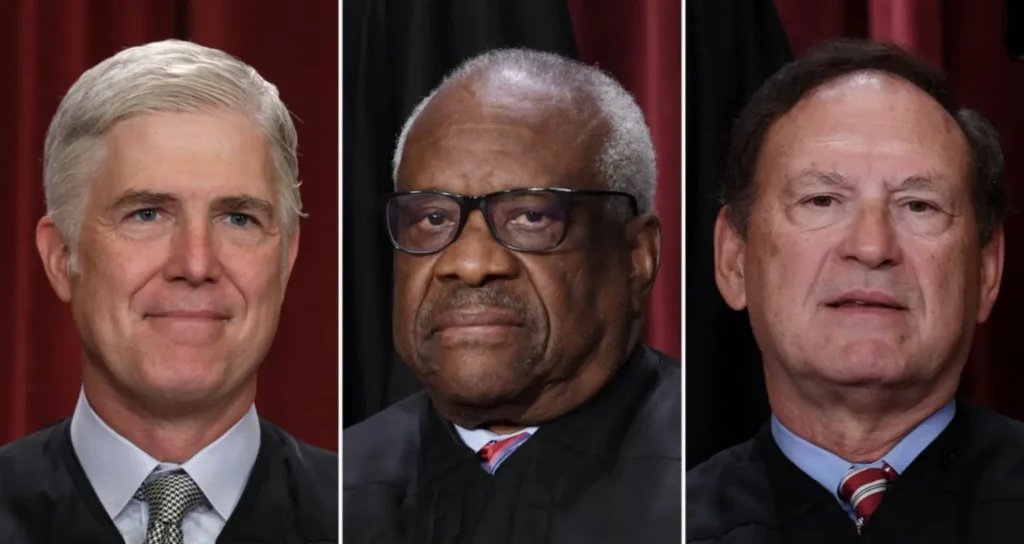
The U.S. Supreme Court has unanimously decided in favor of a postal worker from Pennsylvania in a significant religious liberty case involving the appropriateness of employers’ accommodation of religious preferences in the workplace.
Christian mailman Gerald Groff of Pennsylvania requested the court rule on whether the U.S. Postal Service may make him deliver parcels from Amazon on Sundays, which he observes as the Sabbath. His lawyer, Aaron Streett, argued in April that the court needed to review a decision from 50 years ago that set a standard for figuring out when companies have to make allowances for their workers’ religious practices.
In a 9-0 decision, the Supreme Court rejected a ruling from 1977 that mandated that businesses must “reasonably accommodate” an employee’s religious practices as long as doing so does not put an “undue hardship” on the company.
Title VII of the Civil Rights Act of 1964 requires employers to accommodate employees’ religious practices unless doing so would be an “undue hardship” for the business. A 1977 Supreme Court case, Trans World Airlines v. Hardison, said employers could deny religious accommodations to employees when they impose “more than a de minimis cost” on the business.
Streett said the court should get rid of the “de minimus” test because lower courts have used it wrongly to deny religious accommodations. Instead, he said, the court should use the plain language of Title VII, which would define “undue burden” the same way it is in other federal laws, like the Americans with Disabilities Act (ADA).
Back in April, postal worker unions asked the U.S. Supreme Court to consider the potential adversity that religious accommodations for some employees may have on their co-workers.
“A day off is not the special privilege of the religious. Days off, especially on the weekend, are when parents can spend the day with children who are otherwise in school, when people can spend time on the other necessities of life, and when the community enjoys a common day of rest for churchgoers and the nonreligious alike,” the American Postal Workers Union noted in a brief to the court.
Title VII mandates that employers accommodate a worker’s religious observance or practices unless it results in “undue hardship” for the business. In the 1977 case, Trans World Airlines v. Hardison, the Supreme Court defined undue hardship as anything that imposes more than a minor or “de minimis” cost on the employer.
Groff’s legal team requested that the Supreme Court overturn the Hardison precedent and mandate that companies demonstrate a “significant difficulty or expense” before refusing to grant an accommodation.
Several groups representing religions in the United States that are in the minority, including Islam, Judaism, and Hinduism, have informed the Supreme Court that the Hardison standard has unfairly impacted them and must be revised, Reuters noted in a prior story and report.
“By allowing employers to refuse to accommodate employees’ beliefs for almost any reason, Hardison forces devout employees to make an impossible daily choice between religious duty and livelihood,” said the Muslim Public Affairs Council in a brief.
James Phillips, a law professor at Chapman University in California, told Reuters that a “strong majority” or even all nine justices could side with Groff.
“This may be one of those religious liberty cases where the right and the left are actually aligned,” Phillips opined.
Groff was employed as a “rural carrier associate” in Quarryville and Holtwood, in Lancaster County, Pennsylvania. As part of his job, he was required to substitute for absent career carriers, including on weekends.
In 2013, the Postal Service contracted with Amazon.com to deliver packages, which included Sunday deliveries, in an effort to remain profitable.