Susan Collins Seeks Re-Election In High-Stakes 2026 Midterm Race
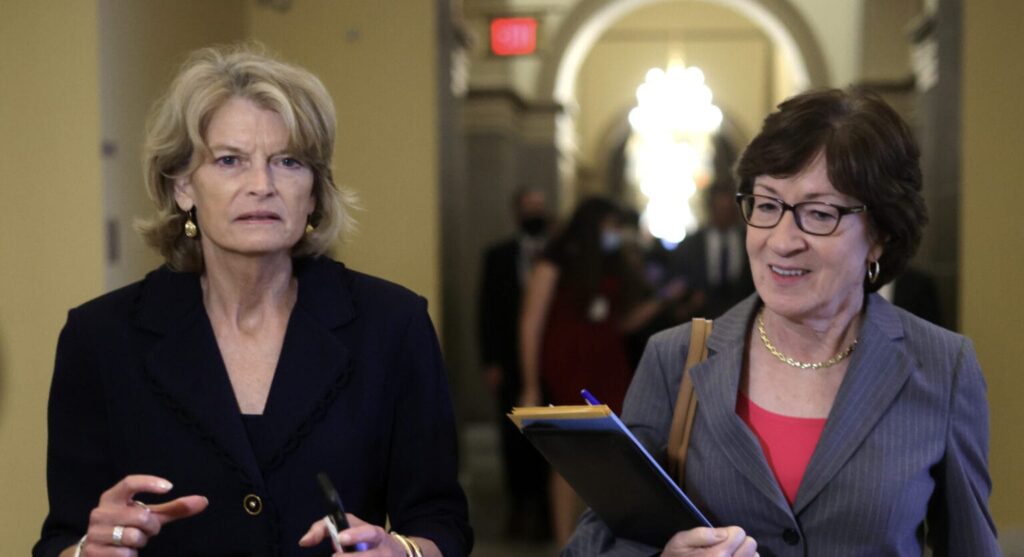
Main Republican Sen. Susan Collins reaffirmed this week that her “position in the middle of American politics” is why she will run for re-election in 2026, setting up a high-stakes Senate race in the midterms.
During a 30-minute phone call with Punchbowl News in Washington, Collins, 72, said again that she plans to run for a sixth six-year term.
“I still plan to run for re-election,” she said, despite frustrations with current Senate dynamics and its increasingly irregular budgeting and appropriations process. “People who are in the middle are tending to leave. They’re tending to retire.”
Collins, who is the head of the Senate Appropriations Committee, said that she is the only Republican in the U.S. Senate and U.S. House of Representatives from the six New England states of Maine, New Hampshire, Vermont, Massachusetts, Connecticut, and Rhode Island. This is a big change from when she joined the Senate in 1997, when the region was more bipartisan.
Collins said, “I think that was much healthier. It was a much less polarized era, and it’s important to have voices of people who want to solve problems. I’m not one who tends to rant and rave on certain news shows. Instead, I like to bring people together to search for common ground.”
“What we need in this country is for those that are in the center to be as riled up and involved as those on the far left and the far right,” Collins said. “It is hard to get things done.”
The race will be closely watched.
Collins got some troubling news recently about her reelection in Maine.
Collins, who is considered the most centrist Republican in the Senate and has been popular in the state for a long time, has won tough races for Republicans in the past.
Experts view the race as highly competitive ahead of the 2026 midterms, attracting significant investment from both major parties.
A new Cygnal survey released on Monday showed Collins behind a generic Democratic candidate. This suggested that extending Affordable Care Act (ACA) subsidies could help her win over Mainers. Politico was the first to report on the poll.
According to the survey, 41% of those who answered said they would vote for Collins, while 49% said they would vote for a Democrat. The report said that she “starts behind but beats expectations.”
If the Republican senator votes to extend the tax benefits, the election would get closer.
“Collins consistently overperforms the GOP baseline, especially among college-educated women (+8 net), voters over 55 (+6), and swing voters (+10),” the polling memo reads.
The ACA, which was President Barack Obama’s main program, gave Congress the power to make those credits. They let Americans with low incomes sign up for health insurance coverage. They were expanded in 2021 to cover more Americans during the pandemic.
If Congress doesn’t do anything, they will probably run out by the end of the year. As part of a deal with moderate Democratic senators to reopen the government, Senate Republicans are going to vote on the tax credit.
The poll revealed that 43% of people would vote for Collins if he votes to prolong the tax credits, while 45% would vote for the Democratic candidate. That still gives the Democrats a small edge, but it indicates that the battle is close.
CBS News stated that Collins favors their extension but thinks they require “reform.”
There were no questions concerning individual candidates in the survey. Mills and Platner are in a heated primary race on the Democratic side to see who will oppose Collins. Collins hasn’t officially started her campaign yet, but she has said she plans to run again.
Polls have shown that the race is quite close.
A poll from the Maine People’s Resource Center last month showed Collins ahead of Mills by four points (46% to 42%), and Platner ahead of Collins by four points (45% to 41%).
It asked 783 Maine voters from October 26 to 29, and the results could be off by as much as 3.5 percentage points.