Senate Passes Trump-Backed Spending Cuts In Recission Bill
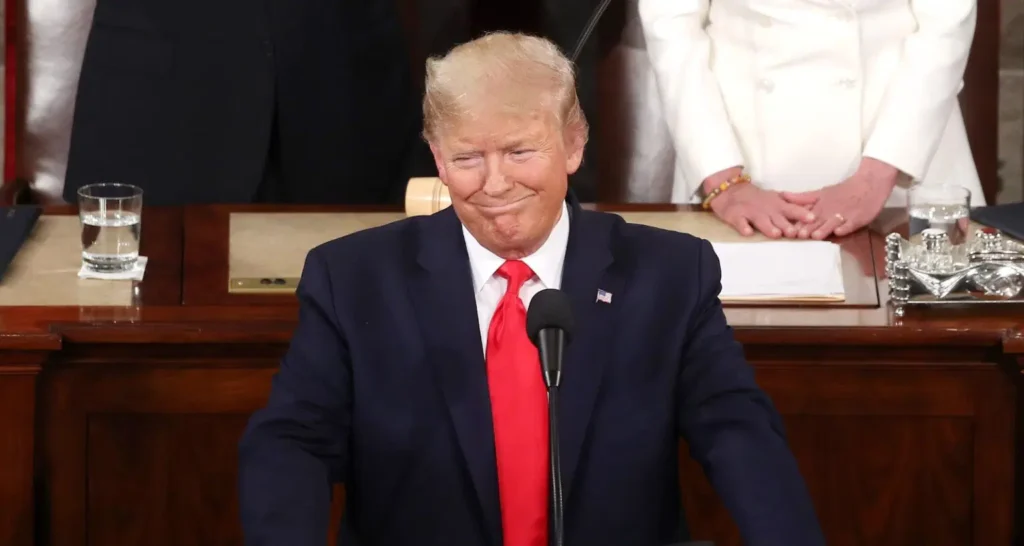
The U.S. Senate approved a $9 billion federal spending rescission package in a 51-48 vote early Thursday, delivering a significant victory for President Donald Trump’s push to downsize government. The measure includes major cuts to foreign aid and eliminates subsidies for National Public Radio and PBS.
Senators Lisa Murkowski of Alaska and Susan Collins of Maine, both Republicans, joined Democrats in voting against the rescissions package.
The measure now returns to the House, which had earlier passed a slightly larger $9.4 billion version. The Senate trimmed the package by reinstating $400 million in AIDS funding for Africa to secure enough support for passage, Just the News reported.
Senate Majority Leader John Thune hailed the vote as a crucial first step toward fostering a new culture of fiscal responsibility in Congress, following years of roughly $2 trillion annual budget deficits.
“I appreciate all the work the administration has done in identifying wasteful spending,” Thune said. “And now it’s time for the Senate to do its part to cut some of that waste out of the budget. It’s a small but important step toward fiscal sanity that we all should be able to agree is long overdue.”
Collins, chair of the Senate Appropriations Committee, said she supports the concept of rescissions in principle—especially when done through the normal appropriations process—but couldn’t back the White House’s proposal due to a lack of transparency from the Office of Management and Budget (OMB).
Collins criticized the “sparse text” provided to lawmakers, noting it offered few details and failed to clearly identify which programs would be cut to reach the original $9.4 billion goal, Fox News reported.
“For example, there are $2.5 billion in cuts to the Development Assistance account, which covers everything from basic education, to water and sanitation, to food security — but we don’t know how those programs will be affected,” she said.
Murkowski, meanwhile, called for a return to regular legislating and warned that Congress appeared to only be following directives from the Trump White House rather than exercising its own authority.
Both Murkowski and Sen. Susan Collins expressed concern over proposed cuts to public broadcasting, especially their potential impact on rural radio stations. During the vote-a-rama, they each sought to amend the bill.
Collins ultimately chose not to bring her amendment, aimed at scaling back the total cuts to just over $6 billion, to the floor. However, Sen. Mark Kelly (D-Ariz.) introduced it on her behalf. Murkowski put forward her own amendment to significantly reduce the cuts targeting public broadcasting.
The bill’s final vote came just hours after tsunami warnings were issued across Alaska—an event Murkowski cited as a key reason to preserve funding for public broadcasting, noting that critical emergency alerts in her state are often delivered through local public radio stations.
“The tsunami warnings are now thankfully canceled, but the warning to the U.S. Senate remains in effect,” she said. “Today of all days, we should vote down these misguided cuts to public broadcasting.”
Their decision to oppose the package left some GOP senators puzzled. Sen. Ron Johnson (R-Wis.), for instance, pointed out that the proposed cuts represented less than a tenth of a percent of the federal government’s total budget, questioning the pushback over such a relatively small reduction.
“This should be a chip shot, OK? I have faith in [OMB Director] Russ Vought,” he argued at one point. “I have faith in the Trump administration. They’re not going to cut things that are important spending.”
Sen. Eric Schmitt (R-Mo.), who is spearheading the bill in the Senate, pushed back against Murkowski and Collins’ criticisms, arguing that lawmakers debating and shaping the rescissions package was entirely consistent with their legislative responsibilities as well as the GOP’s fiscal conservatism.
“That’s exactly what we’re doing,” he said. “I would hope that maybe what this will also do is highlight some of the wasteful spending, so when we get into the appropriations process in the next few months that we would be more keen to be focused on saving people money.”